About the Artist
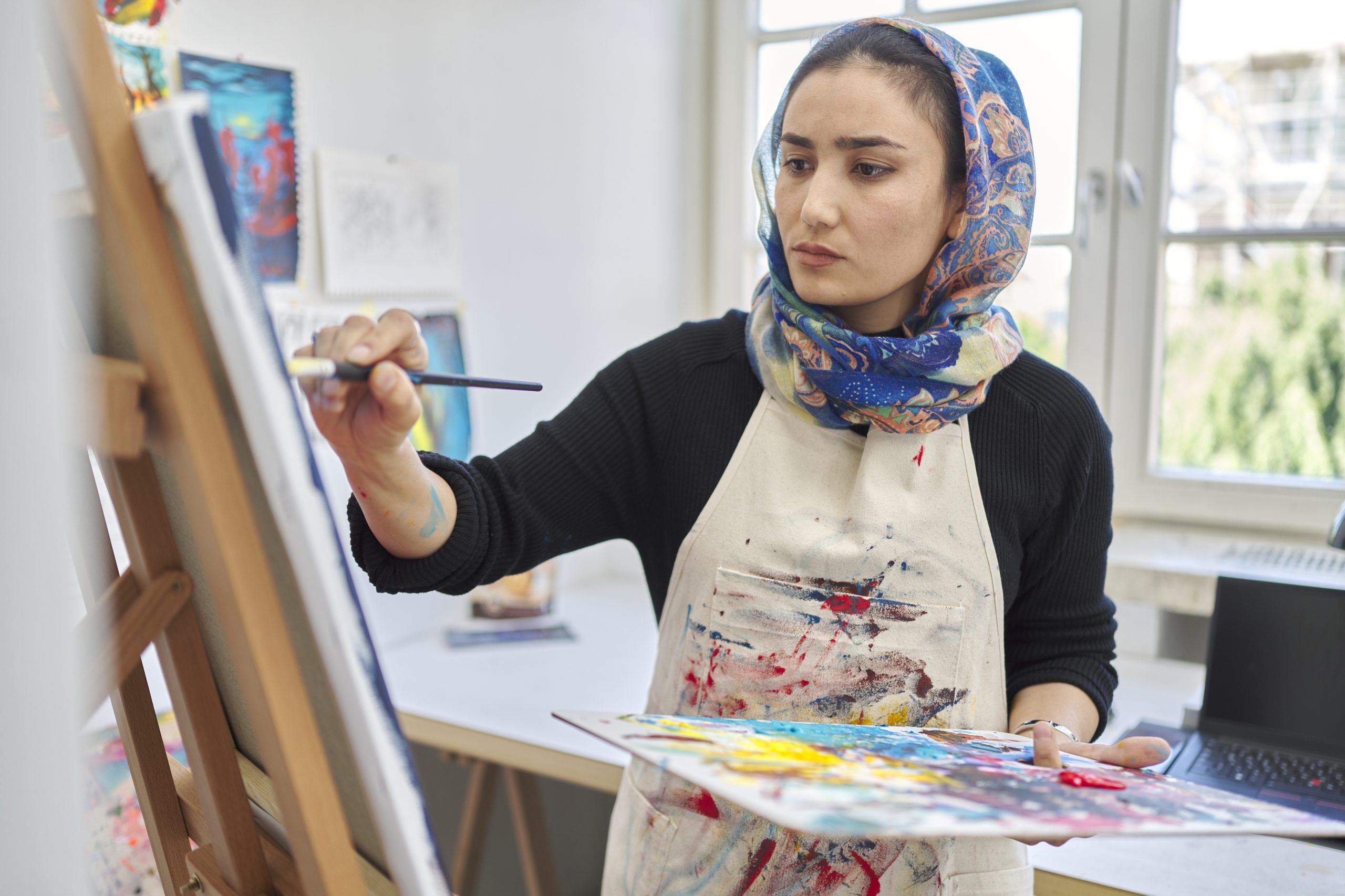
Nabila Horakhsh is a visual artist from Afghanistan whose creative practice deeply reflects her personal experiences as well as the ongoing struggles faced by her community. She graduated from Kabul University with a degree in Persian–Dari Literature and began her journey into contemporary visual art in 2008 at the Center for Contemporary Arts Afghanistan (CCAA). Over the years, her work has been exhibited internationally, with shows held in Afghanistan, across Europe, Canada, India, and the United Arab Emirates. In addition to her artistic practice, she is a co-founder of Berang Arts in Kabul, an important initiative that organized exhibitions, seminars, and workshops specifically aimed at nurturing and supporting emerging artists. Her projects are designed to challenge and shift public perception of contemporary art while simultaneously addressing critical issues such as gender inequality and the complex, multifaceted realities of life in Afghanistan. After the fall of the Afghan Republic government, she began her artistic work and life as an artist in exile in Germany in 2022. Nabila completed a rigorous nine-month artist-in-residence program at HFBK Hamburg, supported by the Martin Roth-Initiative. Since her relocation to Germany, she has actively participated in numerous group exhibitions throughout the country, sharing her powerful work in various contemporary art spaces and cultural institutions.
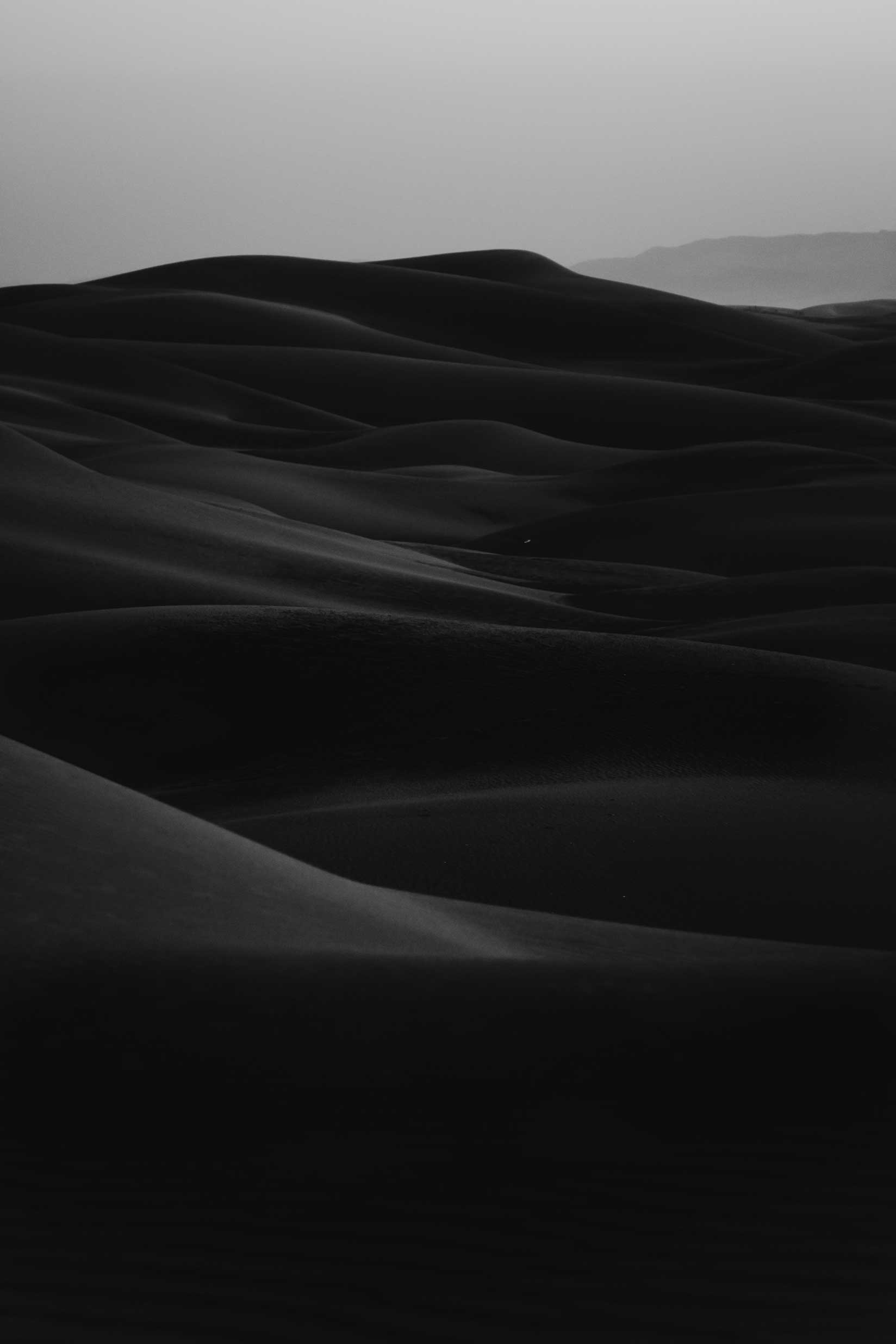
Nabila Horakhsh’s artworks give voice to untold stories and deeply personal inner narratives that are shaped by lives lived in a constant tension between resistance to darkness and a hopeful yearning for light. Using mediums such as photography, painting, and collage, her practice draws inspiration from Sufism, which serves as a vital source of energy, spiritual connections, and inner strength. Her work eloquently speaks of love and unity as fundamental forces essential for humanity’s survival and well-being, inviting viewers into a contemplative and reflective space where suffering, resistance, and hope quietly coexist in delicate balance.